


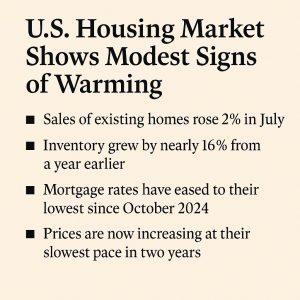
After several years of chilly conditions, the U.S. housing market is finally showing a hint of warmth. New data from the National Association of Realtors (NAR) reveals that sales of existing homes rose by 2% in July compared to the month before. At the current pace, the group projects about 4 million existing homes will be sold this year — a number far below the frenzied pace of the pandemic and even weaker than pre-pandemic activity.
More Homes on the Market
One of the bright spots in the new figures is inventory. In July, there were 1.55 million homes for sale nationwide, nearly 16% more than a year earlier. According to NAR chief economist Lawrence Yun, this is the highest level of inventory since the 2020 lockdowns.
For buyers, the increase is welcome news. More listings mean more choice and stronger bargaining power. For sellers, however, it brings challenges. Homes are taking longer to sell — an average of 28 days, up from 24 days in July 2024.
Prices Show Signs of Cooling
The market’s pace has slowed partly due to high prices and elevated mortgage rates. Realtor.com found that home prices fell in 33 of the 50 largest metro areas in July, while NAR data showed weakness in the South and West. Wells Fargo reports that home prices nationwide are now increasing at their slowest rate in two years.
Even with those declines, the median home price in July was still $422,400, a level that continues to squeeze many buyers out of the market. Since before the pandemic, home values have climbed nearly 50%.
Mortgage Rates Offer Some Relief
Rates for a 30-year mortgage are averaging 6.6%. While still historically high, rates have dipped slightly in recent weeks to their lowest point since October 2024. That has sparked a surge in refinancing, especially among homeowners whose existing loans carry rates above 7%. By refinancing, many are shaving hundreds of dollars off their monthly payments.
Looking ahead, the Mortgage Bankers Association expects rates to remain around 6.6% through the rest of 2025. A Federal Reserve decision on interest rates in September could affect mortgage costs, though some of that anticipation may already be baked in. If rates ease further into 2026, even slightly, more buyers may feel comfortable reentering the market.
The Lock-In Effect Is Loosening
During the pandemic, many homeowners secured ultra-low mortgage rates near 3%. That so-called “lock-in effect” has kept them from moving, since selling would mean taking on a much higher loan.
But with inventory climbing, some of those owners are finally choosing to sell. “We are still below pre-COVID levels, but certainly we are no longer in that mortgage rate lock-in period,” said Yun. “The turnover in the home sales market still remains sluggish, but the inventory is beginning to show up.”
Mixed Signals from Builders
New construction is also sending mixed signals. The U.S. Census Bureau reported that housing starts rose 5% in July from the month before. However, building permits — a measure of future construction — fell nearly 3%.
Buddy Hughes, chairman of the National Association of Home Builders, pointed to affordability concerns, labor shortages, and high regulatory costs as barriers. “Affordability is the top challenge to the housing market,” he said.
📌 Source: Laurel Wamsley, NPR — “After a few chilly years, the real estate market is looking a little warmer,” August 22, 2025.